The History and Evolution of Farmers Markets in British Columbia
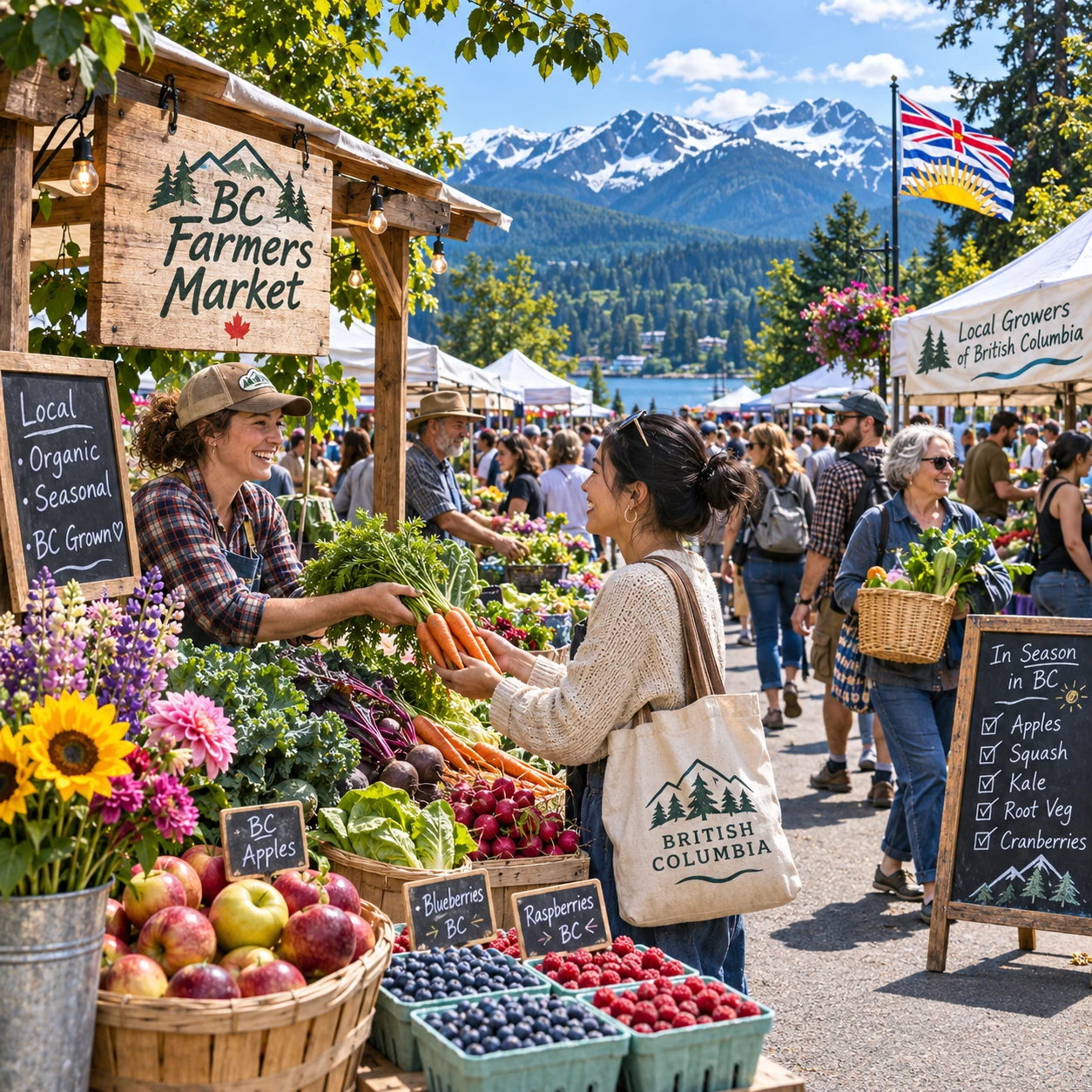
Farmers markets in British Columbia grew from a practical tradition: local producers bringing food to nearby communities. Over time, that direct exchange became more organized and diverse, shaped by the province’s geography, growing seasons, and changing ideas about local food. Today, markets serve urban neighbourhoods and rural towns as places to buy regional goods, meet the people who make them, and take part in community life.
Early roots of local market trading
Farmers markets in British Columbia have roots in the longstanding practice of producers selling food directly to local communities. Before modern market organizations, farms, fishing communities, and small businesses relied on nearby trade to move fresh goods from producer to buyer.
That history did not begin at one market or on one specific date. The province developed through different settlement patterns and regional economies, so local trading took different forms. A community might depend on farm-gate sales, informal roadside stands, town marketplaces, or seasonal gatherings where neighbours could exchange food and other essentials.
Geography shaped the trade. Coastal communities had access to seafood and transportation by water, while agricultural areas supplied crops, dairy, and livestock. In more remote places, local exchange helped connect residents with food that could be difficult or costly to bring in from elsewhere. Markets also offered small-scale farmers a way to sell surplus harvests without relying solely on distant buyers.
These early arrangements were not always the organized weekly events people picture today. Their common thread was proximity: food moved through relationships between local growers, sellers, and customers. That direct connection remains central to the farmers market model.
The modern farmers market takes shape
The modern farmers market in British Columbia took shape as local trading became more structured, with regular schedules, shared spaces, and market associations helping producers and customers find one another. There is no single origin story; markets developed differently in communities across the province.
As towns and cities grew, organized markets provided a dependable place for farmers and producers to sell directly to the public. Market associations helped coordinate vendors, set operating rules, promote events, and establish expectations about what could be sold. This organization made markets easier to recognize and attend, while preserving the face-to-face character of direct-to-consumer sales.
Shoppers also became more interested in where food came from and how it was produced. At a market stall, a conversation could reveal which farm grew the vegetables, when fruit was picked, or how a product was made. That exchange gave seasonal produce a context that a label on a shelf might not provide.
In British Columbia, the modern market movement took root in both urban and rural settings. City markets brought growers closer to large customer bases; smaller communities used markets to sustain local trade and create a regular gathering place. For an overview of how market organizations support the sector, the BC Association of Farmers’ Markets shares information about farmers markets across the province.
What farmers markets offer—and who sells there
Farmers markets offer food and other goods made or grown in the region, with farmers and primary producers at the centre. Depending on the market, shoppers may find seasonal produce, meat, eggs, dairy, baked goods, preserves, prepared foods, and products from local makers.
The mix reflects both local supply and market rules. A summer market in a farming area may feature berries, greens, and vegetables at their peak, while a winter market might offer stored crops, greenhouse produce, meat, cheese, and preserved foods. Some markets include prepared-food vendors and artisans, giving customers more reasons to visit, but those additions do not erase the market’s connection to agriculture.
Producers bring knowledge as well as goods. A grower can explain why a crop is available for only a short period, suggest how to store it, or describe the conditions behind a harvest. These conversations help customers understand seasonality and build trust through repeated contact. For a small farm, selling at a market can also provide direct feedback and a route to customers without a large retail intermediary.
The arrangement has limits. Markets usually operate on set days, and their selection changes with harvests, weather, and vendor availability. They are not designed to provide every product at every time of year. Their strength lies in connecting customers to what local producers can offer, rather than matching the consistency of a large grocery store.
How markets have changed over time
British Columbia farmers markets have changed in their organization, product range, and role in daily life, while retaining direct relationships between producers and shoppers. Many now combine agricultural sales with community programming and a more deliberate focus on market standards.
Market associations and organizers help manage practical details such as vendor applications, stall layouts, operating schedules, and public communication. Some markets use rules to prioritize local or producer-made goods. The specifics differ, so shoppers should not assume that every market has the same vendor criteria or product mix.
Customer expectations have also shifted. Shoppers may ask about growing practices, ingredients, food origins, or the people behind a business. Vendors, in turn, use markets to test products, explain their methods, and build a dependable customer base. Social media and online listings make schedules easier to share, though they cannot replace the in-person exchange that gives a market much of its character.
Markets have expanded beyond the simple act of buying food, too. Some host cooking demonstrations, music, children’s activities, or community information tables. These features can make a market more welcoming, but they require space and organization and should complement, rather than crowd out, local producers. The evolution is best understood as adaptation: each market responds to its community while balancing access, vendor needs, and its agricultural purpose.
Markets across BC’s urban and rural communities
Farmers markets vary across British Columbia because local geography, climate, growing seasons, and community needs vary. A large city market and a small rural market may share a direct-sales model but differ greatly in scale, schedule, and available goods.
Urban markets can draw on a larger customer base and host a broad mix of farms, food businesses, and makers. They may bring producers from surrounding agricultural regions into neighbourhoods where farmland is limited. Rural markets often reflect the surrounding landscape more directly, with vendors and customers living closer to the farms and businesses represented.
Seasonality is just as important. Coastal conditions, interior climates, elevation, and local infrastructure affect what can be grown and when. A market’s summer abundance may give way to a smaller winter selection, while some communities keep markets operating year-round through indoor venues or a changing mix of stored and prepared goods. Not every market has the same growing season or the same capacity to stay open through colder months.
Local needs shape the format. Some communities use markets as regular social meeting points; others rely on them as a sales channel for small producers or as a way to make regional foods more visible. Their scale and atmosphere may differ, but both urban and rural markets can strengthen connections between local food systems and the people they serve.
The role of farmers markets today
Today, farmers markets support local food systems by creating direct-to-consumer sales opportunities, connecting shoppers with farmers and producers, and providing community gathering places. Their contribution depends on the needs and resources of each community, so it should not be treated as identical from market to market.
For producers, a market offers a public place to sell, explain products, and hear what customers value. Direct sales can help a farm retain more control over how it presents its goods, although vending also takes time, transport, staffing, and preparation. For shoppers, markets offer a changing selection and the chance to learn who produced the food. They can also make seasonal eating more visible by showing what is available locally at a particular point in the year.
Markets have a social role as well. A weekly market can become part of a town’s or neighbourhood’s routine, bringing residents together around food and local businesses. That role matters, but markets do not replace grocery stores, food banks, or broader solutions to affordability and food access. Price, opening hours, transportation, and seasonal supply can all affect who is able to participate.
The history of farmers markets in British Columbia is therefore a history of local relationships adapting to changing communities. From informal exchanges to organized markets, the durable idea is simple: bring producers and shoppers together, make regional food visible, and give communities a place to meet around what is grown and made nearby.