Organic vs. Conventional Farming in British Columbia: What Farmers Market Shoppers Should Know
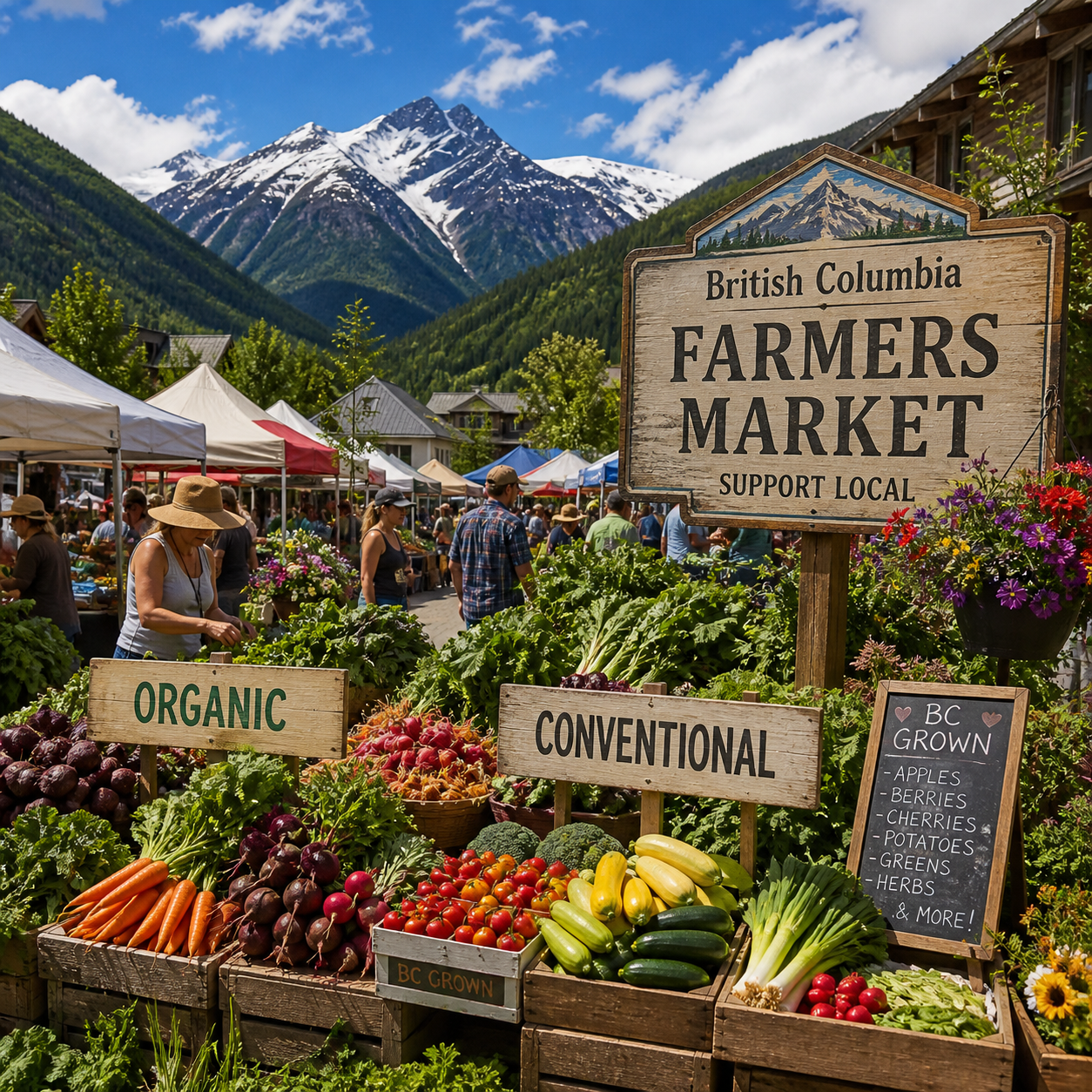
At a British Columbia farmers market, a basket of apples, greens, or tomatoes represents more than a choice between labels. It reflects a farmer’s land, crop, climate, labour, equipment, and approach to managing risk. Understanding organic vs. conventional farming in British Columbia can help shoppers ask better questions and choose food according to their own priorities.
Organic certification, local sourcing, seasonality, and sustainability describe different things. A farm may be certified organic and relatively far from your community, while a nearby conventional farm may use careful soil management and integrated pest management. The most useful comparison looks beyond assumptions and focuses on what happens in a particular field.
What Organic and Conventional Farming Mean in BC
Organic farming in British Columbia follows regulated organic production standards when a farm makes a certified organic claim, while conventional farming includes many different production systems that are not governed by organic certification rules. Neither term describes every farm perfectly without additional information.
Certified organic farms must follow approved standards covering areas such as prohibited inputs, soil fertility, seed and livestock practices where applicable, record keeping, and handling. Certification involves inspection and documentation by an authorized certification body. Organic producers can use certain crop protection products and fertilizers, but those products must meet organic requirements.
Conventional farming is a broad category. It may include a small family farm using hand cultivation, compost, cover crops, and limited crop protection, as well as a larger operation using synthetic fertilizers, herbicides, specialized machinery, or controlled irrigation. The word conventional does not reveal how intensively or thoughtfully a farm manages its land.
British Columbia agriculture includes berry farms in the Fraser Valley, tree fruit operations in the Okanagan, greenhouse growers near urban centres, vegetable farms on Vancouver Island, grain and forage production in the Interior, and ranching across the province. Production methods vary with crop, scale, market, and geography.
How Farming Practices Differ
Organic and conventional farming differ mainly in which inputs and methods are permitted, monitored, and recorded. In both systems, farmers may use crop rotation, cover crops, compost, irrigation planning, beneficial insects, and careful scouting, although the details and available tools differ.
Soil health and crop rotation
Soil health involves structure, organic matter, nutrient availability, water movement, and biological activity. Organic farms often rely heavily on crop rotation, compost, manure, green manures, and cover crops to build fertility and interrupt pest cycles. Conventional farms may use the same practices, alongside synthetic fertilizers or other targeted inputs.
Crop rotation can reduce disease pressure and improve nutrient planning, but it is not equally practical for every farm. A small diversified vegetable farm may rotate beds several times each year. A specialized orchard or perennial berry operation faces different constraints and may focus on mulches, understory management, pruning, and soil monitoring.
Weed and pest management
Organic weed control commonly depends on cultivation, hand weeding, mulches, stale seedbeds, flame weeding, dense planting, and rotations. Organic crop protection products are permitted only when they meet applicable organic standards. These methods can reduce reliance on synthetic herbicides, but they may require more labour, timing, and mechanical passes.
Conventional pest management may include crop monitoring, physical barriers, biological controls, cultural practices, and carefully selected pesticides. Many farms use an integrated pest management approach: identify the pest, estimate the risk, consider non-chemical options, and treat only when action is justified. The label conventional does not automatically mean routine spraying.
Fertilizers and crop protection
Organic and conventional fertilizers differ in their permitted sources and how quickly nutrients become available. Compost and manure can add organic matter, but they still require accurate application to avoid nutrient losses. Synthetic fertilizers provide precise nutrients in readily available forms, yet poor timing or overapplication can contribute to runoff and greenhouse gas emissions.
Choosing organic production for restricted inputs can mean accepting higher labour demands, more complex weed control, or lower yields in some crops and conditions. Choosing conventional tools can improve crop protection and consistency, while creating a responsibility to minimize exposure, protect water, and follow product labels and application rules.
The Role of British Columbia’s Climate and Regions
British Columbia’s varied climate and terrain shape both organic and conventional farming decisions. Coastal rain, dry Interior summers, mountain valleys, short northern growing seasons, and regional frost patterns influence crop choice, disease pressure, irrigation, and harvest timing.
In the Fraser Valley and other wet coastal areas, persistent moisture can increase fungal disease and weed pressure. Farmers may use raised beds, protected cultivation, drainage improvements, resistant varieties, pruning, ventilation, or crop protection products. Organic growers face the same disease conditions but have a narrower list of approved interventions.
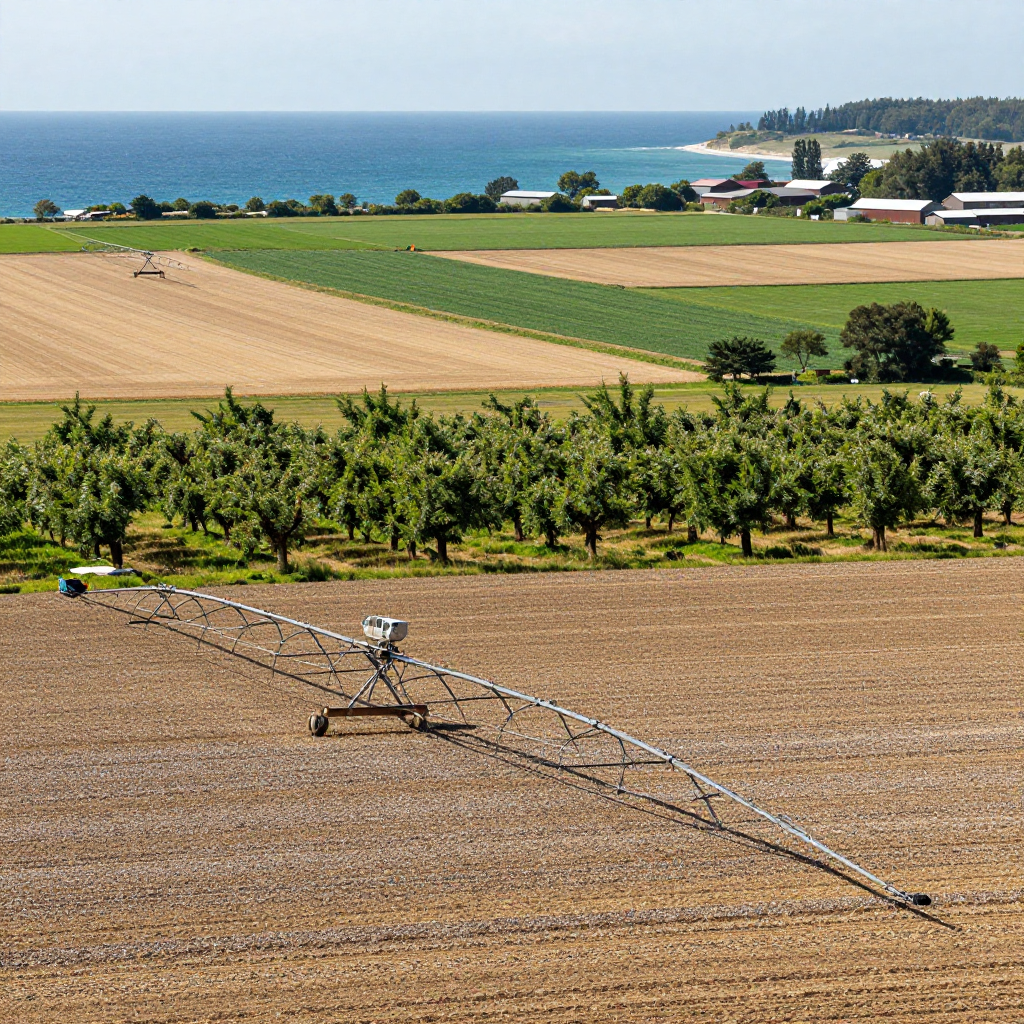
The Okanagan’s warm, dry summers support tree fruit, grapes, vegetables, and other specialty crops, but irrigation and water management remain central concerns. Orchards also involve perennial systems, where soil cover, habitat, pruning, pest monitoring, and weed control must be managed over many years rather than a single growing season.
Vancouver Island and the Gulf Islands offer strong markets for local and seasonal produce, but farms may work with limited land, wind exposure, variable rainfall, and high land or labour costs. In the Interior and northern regions, frost risk and shorter seasons can make greenhouses, row covers, storage, and rapid harvest planning especially valuable.
These conditions explain why the same practice may make sense on one farm and create problems on another. A farmer’s answer about irrigation, spraying, or soil amendments is more meaningful when you know the crop and region involved.
Environmental and Farm-Level Considerations
Environmental performance depends on the specific practice, crop, climate, and farm system, not on the label alone. Organic and conventional farms can each produce environmental benefits and face environmental pressures.
Organic production may support soil-building practices, crop diversity, and reduced reliance on synthetic pesticides. However, mechanical weed control can disturb soil, and lower yields in certain situations may require more land to produce the same quantity. Organic-approved products are not automatically harmless; dose, timing, toxicity, and effects on non-target organisms still matter.
Conventional farms may use precision application, resistant varieties, conservation tillage, drip irrigation, cover crops, and integrated pest management to reduce input use. These tools can protect crops and improve efficiency, but synthetic fertilizers and pesticides require careful stewardship. Runoff, drift, resistance, and impacts on pollinators or aquatic life are legitimate concerns when products are misused.
Farm scale also changes the calculation. A small-scale farmer may rely on hand labour because specialized equipment is unaffordable. Another may use a tractor, plastic mulch, or a targeted treatment to protect a crop from total loss. Labour availability, crop value, access to markets, water, and weather can determine whether a method is practical.
For shoppers, a useful framework is land, inputs, labour, and resilience:
- Land: How is soil structure, erosion, and organic matter managed?
- Inputs: What fertilizers and pest-control products are used, and why?
- Labour: Does the method depend on intensive hand work or specialized equipment?
- Resilience: How does the farm respond to drought, disease, extreme heat, or crop failure?
There is no single environmental score that applies to every BC farm. Transparency about trade-offs is more useful than broad claims.
What Organic Certification Tells Shoppers
Organic certification tells shoppers that a farm has met defined production and record-keeping standards verified through an inspection process. It provides a consistent meaning for the certified organic claim, although it does not guarantee that a product is local, low-impact in every category, or available year-round.
Certification matters because shoppers cannot observe every field decision. Records, inspections, approved input lists, and handling requirements create accountability. If a farm is not certified, it should not present its products as certified organic, even if the farmer follows many organic-style practices.
Terms such as local, sustainable, and organic answer different questions:
- Organic: How was the product produced under a recognized standard?
- Local: Where was it grown, and how close is it to the market?
- Sustainable: How does the farm balance environmental, economic, and social considerations over time?
A local farm may be conventional. A certified organic farm may sell produce grown outside your region. A sustainable claim may refer to soil health, water conservation, worker conditions, biodiversity, or long-term business viability, so ask what the farmer means by it. Shoppers can review Canada’s official organic rules through the Canadian Food Inspection Agency.
How to Shop More Confidently at a BC Farmers Market
To shop confidently at a BC farmers market, ask specific, open-ended questions about production methods rather than relying on a single label. Farmers usually appreciate genuine interest, especially when questions acknowledge that practices vary by crop and season.
- Are you certified organic, and if so, which products or fields does the certification cover?
- What fertilizers, composts, or soil amendments do you use?
- How do you manage weeds without damaging soil structure?
- What pests or diseases are most difficult on this crop?
- Do you use integrated pest management, beneficial insects, row covers, or other non-chemical methods?
- When you use a crop protection product, what triggers that decision?
- How do you manage irrigation and conserve water?
- Do you rotate crops or use cover crops?
- Was this produce grown here, or did the farm bring it in from another location?
- What is naturally in season on your farm right now?
Listen for concrete answers. A farmer who describes scouting, planting dates, compost rates, crop rotation, or disease prevention is giving you more useful information than someone who offers only a broad slogan. You can also ask whether a practice applies to all crops or only to the item in your hand.
Choosing Produce Based on Your Priorities
The best choice depends on which priorities matter most to you: certification, local sourcing, seasonality, farming practices, budget, or a relationship with a producer. You do not need to treat those priorities as interchangeable.
If certification is your main concern, look for the certified organic label and ask what it covers. If reducing transportation distance and supporting British Columbia agriculture matter most, prioritize local and seasonal produce. If soil health or pesticide reduction is central, speak directly with farmers about rotations, cover crops, scouting, and crop protection.
Budget also matters. Organic production can involve additional certification fees, labour, weed-control costs, and crop risk. Conventional production may offer lower costs in some crops, while a small local farm may charge more because it grows on a limited scale and sells through direct markets. Price alone cannot reveal the quality of a farm’s management.
A practical approach is to choose a few questions that match your values, then build relationships with producers whose answers you trust. Buy what is in season, learn how regional conditions shape the harvest, and remain open to farmers using different tools responsibly. At a farmers market, informed choice comes from conversation and context rather than a single universal verdict.
Frequently Asked Questions
Is all produce at a BC farmers market certified organic?
No. Farmers markets include certified organic farms, conventional farms, and producers who may use some organic practices without certification. Ask the vendor directly and look for clear signage.
Is conventional farming always less sustainable?
No. Conventional farming includes many systems. A conventional farm may use cover crops, conservation tillage, efficient irrigation, crop rotation, and integrated pest management. Sustainability depends on the actual practices and results.
What does organic mean when a farm is not certified?
It may mean the farmer follows some or many organic-style practices, but the claim does not carry the same verified meaning as certified organic. Ask which inputs and methods the farm uses.
Are local and organic the same thing?
No. Local describes where food was grown or sold; organic describes production under a recognized standard. Food can be local and organic, local and conventional, or organic and from outside BC.
What should I ask a farmer about how produce was grown?
Ask about certification, fertilizers, pest management, crop rotation, soil health, irrigation, seasonality, and whether the produce was grown on that farm. Specific questions lead to more useful answers.