How to Start a Farmers Market in British Columbia: A Step-by-Step Guide
Starting a farmers market in British Columbia is one of the most rewarding ways to strengthen a local food economy and build genuine community connections. It is also more involved than most people expect. Before the first tent goes up, you will need to work through legal structures, permits, location negotiations, vendor recruitment, and a fair amount of logistics. This guide walks you through each stage in sequence so you can move forward with clarity.
Understand What It Takes to Run a Farmers Market in BC
Running a farmers market is a sustained organizational commitment, not a one-time event. A successful market requires consistent leadership, reliable vendor relationships, and ongoing community trust built over multiple seasons.
Most market organizers in British Columbia describe the first year as the steepest learning curve. You are simultaneously managing relationships with the municipality, negotiating with landowners, onboarding vendors, and handling day-of operations — often with a small team of volunteers. Expect to invest significant time in the months before opening, particularly on regulatory groundwork.
The financial picture is equally important to understand early. Farmers markets typically generate revenue through vendor stall fees, and some access grants through agricultural or community development programs. They are rarely profit-driven ventures. If you are expecting a quick return, a farmers market is the wrong vehicle. If you are motivated by local food access and community building, you are in the right place.
Choose Your Market Model and Legal Structure
The legal structure you choose will shape how your market is governed, how it accesses funding, and how liability is managed. Most established markets in BC operate as non-profit societies registered under the BC Societies Act.
Incorporating as a society under the BC Societies Act gives your market a formal governance structure, a board of directors, and the ability to apply for grants that are unavailable to unincorporated groups. It also separates personal liability from the organization's liability, which matters when things go wrong.
The alternative — operating as a sole organizer or informal collective — is simpler to set up but carries real risk. If a vendor dispute or an injury at the market leads to a legal claim, an unincorporated organizer may face personal exposure.
Key questions to resolve at this stage:
- Will the market be run by a dedicated society, or under the umbrella of an existing organization (a municipality, a fair association, a community centre)?
- Do you have at least three people willing to serve as founding directors?
- Are you pursuing charitable status, or a standard non-profit designation?
Consulting a lawyer familiar with BC society law before filing is worth the cost. The BC Registry Services handles society incorporation, and the process is more straightforward than it sounds once you have your constitution and bylaws drafted.
Navigate BC Permits, Licences, and Regulations
Every farmers market in BC needs at least one permit, and most need several. The exact requirements depend on your municipality, your market's scale, and what your vendors are selling.
Start with your local municipality. Most cities and districts require either a municipal business licence or a special event permit — sometimes both. Contact your municipal planning or bylaw department early, because processing times vary and some municipalities have never issued a permit for a farmers market before. Be prepared to explain what a farmers market is, what vendors will sell, and how you will manage the site.
On the provincial side, BC food safety and food premises regulations apply to any vendor selling prepared or processed food. Vendors who sell items like baked goods, jams, fermented products, or ready-to-eat foods may need to operate from an inspected facility or comply with the BC Centre for Disease Control's guidelines for low-risk foods. As the market organizer, you are not responsible for each vendor's individual compliance, but you are responsible for ensuring your vendor agreements require it.
If your proposed site involves land in the BC Agricultural Land Reserve (ALR), you will need to check with the BC Agricultural Land Commission. Farmers markets are generally considered compatible with ALR land use, but specific activities may require approval. Verify this directly with the ALC before committing to a site.
Liability insurance is not a permit, but treat it as a regulatory requirement. No responsible municipality or landowner will grant you site access without proof of general liability coverage. The BC Farmers Market Association offers group insurance options for member markets, which is one of the practical reasons to pursue membership early.
Find and Secure the Right Location
Location is one of the most consequential decisions you will make. A great location with modest vendors will outperform a mediocre location with excellent vendors almost every time.
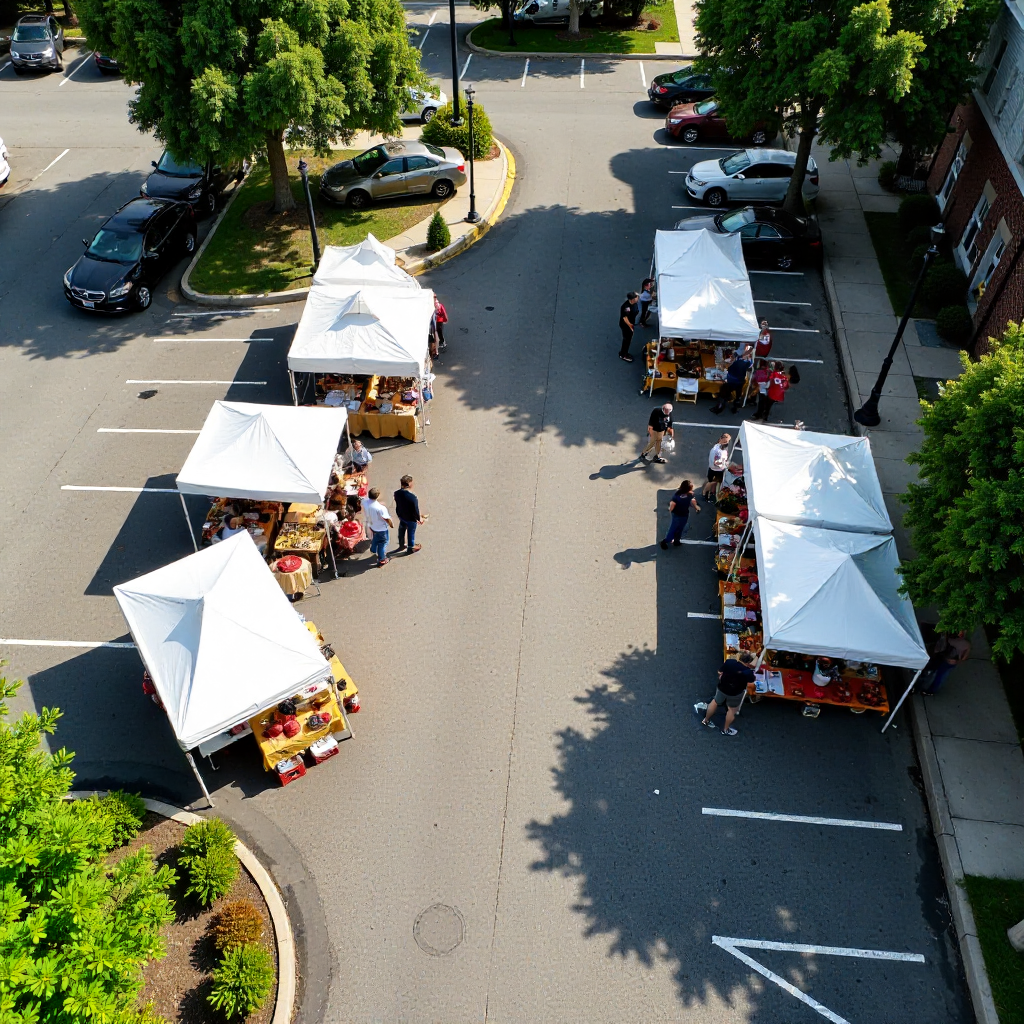
The best farmers market locations share a few characteristics: high foot traffic, easy parking or transit access, and a physical space that can accommodate vendor stalls with room for customers to move comfortably. Public squares, municipal parking lots, fairgrounds, and school grounds are all common options in BC.
When evaluating a site, consider:
- Zoning: Does the current zoning permit a market or temporary retail activity? Your municipality can confirm this.
- Ownership: Is the land owned by the municipality, a private party, or an institution? Each requires a different negotiation approach.
- Infrastructure: Is there access to water, washrooms, and electricity? These matter more as your market grows.
- Seasonal conditions: Does the site offer shade in summer and adequate drainage after rain?
When approaching a landowner or municipality, come with a clear proposal: your market's purpose, expected attendance, operating hours, setup and teardown plan, and how you will leave the site. Municipalities are often receptive to farmers markets because they generate foot traffic for surrounding businesses. Frame the conversation around shared benefit.
Recruit Vendors and Build Your Producer Network
A farmers market without a solid vendor base is just an empty field. Recruiting the right mix of local farmers, food producers, and artisans — and setting up clear agreements with them — is central to your market's identity and longevity.
Start by mapping your local producer network. Contact regional farming associations, visit other markets to introduce yourself, post in local agricultural Facebook groups, and reach out through the BCFMA's producer directories. Aim for a vendor mix that is genuinely local and primarily agricultural, since markets that drift toward craft vendors or imported goods lose their farmers market identity quickly.
Create a vendor application process that collects the information you need: what they sell, where it is grown or produced, whether they hold required licences or certifications, and what size of stall they need. A written vendor agreement should follow for every accepted vendor. That agreement should cover stall fees, setup and teardown times, cancellation policies, conduct expectations, and compliance with food safety regulations.
Be transparent about your fee structure from the start. Vendors talk to each other. Inconsistent or opaque pricing damages trust fast. Many BC markets charge a flat weekly fee per stall, while others use a percentage of sales model. Either can work — what matters is that it is applied consistently and communicated clearly.
Plan Market Operations and Set Up for Opening Day
Operational planning is where many first-time organizers underestimate the detail required. Good logistics on opening day build vendor and customer confidence; poor logistics erode it quickly.
In the weeks before opening, work through this checklist:
- Confirm all permits and insurance are in place
- Finalize the market layout — assign stall positions with traffic flow in mind
- Arrange signage for the entrance, stall numbers, and any rules (pets, smoking, etc.)
- Set up a payment system for vendor fees (many markets now use e-transfer or simple invoicing software)
- Recruit and brief volunteers on their roles
- Prepare a vendor information package with arrival times, parking instructions, and emergency contacts
- Plan your opening day promotion — local newspaper, social media, community boards
Designate a market manager who is on-site for the full duration of every market day. This person handles vendor questions, customer complaints, safety issues, and anything unexpected. In the early stages, this is often the market organizer themselves. As the market grows, hiring or appointing a dedicated manager becomes essential.
Connect with the BC Farmers Market Association and Grow Your Market
The BC Farmers Market Association (BCFMA) is the central resource for anyone running or starting a farmers market in British Columbia. Membership gives you access to training, group insurance programs, promotional tools, and a network of experienced market operators across the province.
The BCFMA also administers programs like the BC Farmers Market Nutrition Coupon Program, which provides subsidized coupons to low-income families redeemable at member markets. Participating in this program expands your customer base and reinforces your market's role in community food security — both things worth pursuing from the start.
You can explore membership and available resources directly through the BC Farmers Market Association website. Reaching out to them before you open is genuinely useful; they have seen most of the problems new markets encounter and can point you toward solutions faster than you would find them on your own.
Long-term market sustainability depends on community engagement as much as operational efficiency. Host seasonal events, feature vendors in your social media, partner with local schools or food banks, and actively ask your customers what they want to see. Markets that treat themselves as community institutions — not just weekly transactions — tend to grow. Those that don't often stall after the novelty wears off.
Frequently Asked Questions
Do I need a special permit to run a farmers market in BC?
Yes, in most cases. The specific requirement depends on your municipality, but you will typically need a municipal business licence, a special event permit, or both. Contact your local bylaw or planning department to confirm what applies in your area before securing a location.
Can I start a farmers market on Agricultural Land Reserve (ALR) land?
Farmers markets are generally considered compatible uses on ALR land, but you should verify your specific situation with the BC Agricultural Land Commission before proceeding. Some activities or structures may require an application or approval.
How many vendors do I need to open a farmers market?
There is no fixed provincial minimum, but most markets aim for at least 10 to 15 vendors before opening to provide customers with a worthwhile experience. A market with fewer vendors risks appearing sparse, which can discourage both customers and additional vendors from joining.
Does my farmers market need liability insurance in British Columbia?
Yes. Liability insurance is essential and will almost certainly be required by your municipality or landowner as a condition of site access. The BCFMA offers group insurance options for member markets, which is often more cost-effective than sourcing coverage independently.
How do I join the BC Farmers Market Association?
Visit the BCFMA website at bcfarmersmarket.org to find current membership details, fees, and an application process. Reaching out to them early — even before your market opens — is encouraged, as they provide guidance and resources specifically designed for new markets in British Columbia.